
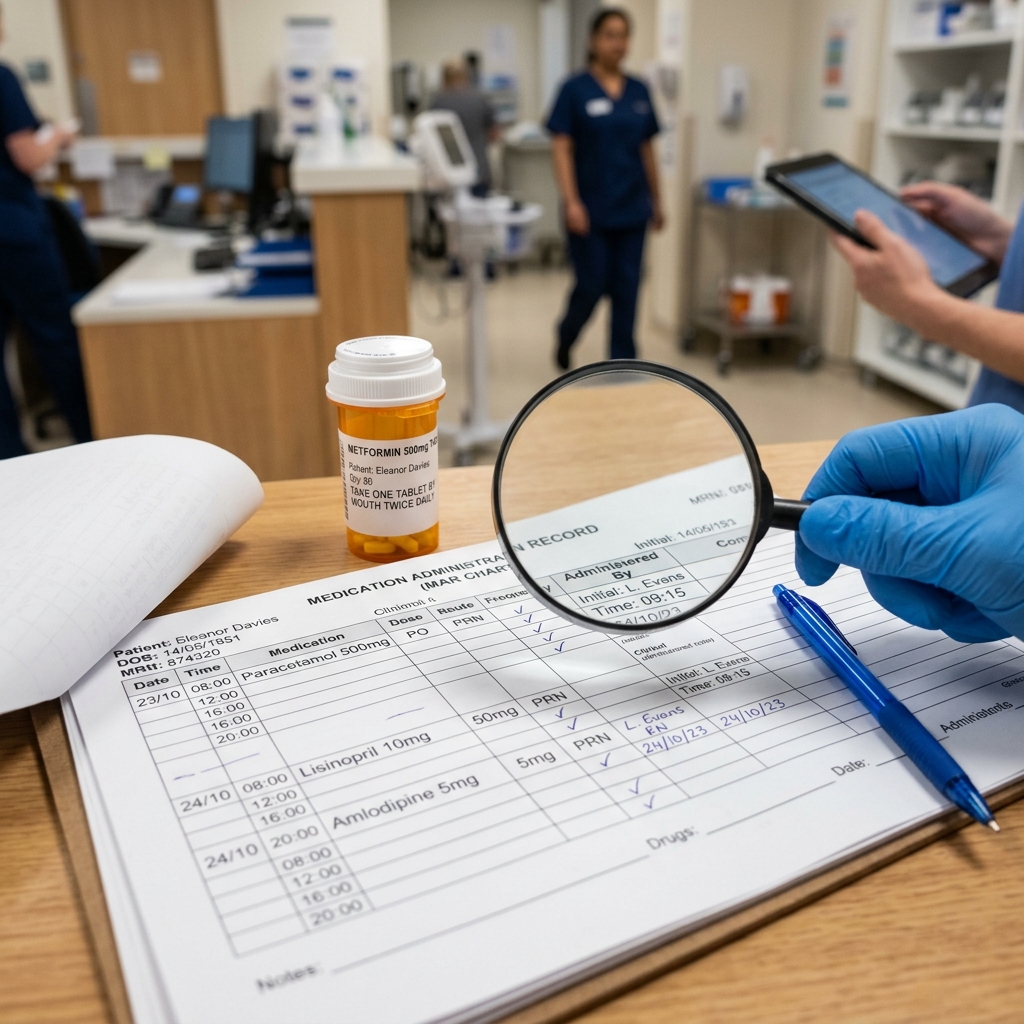
Nursing home cases have a reputation for being document-heavy and hard to win. That reputation is partly earned. The records are often voluminous, the entries repetitive, and the events spread across months or years. But when you know what to look for, these cases tell a very clear story.
What the Records Usually Contain
A nursing home chart typically includes nursing notes, physician orders, care plans, incident reports, therapy notes, and minimum data set assessments. Each one serves a different purpose and tells you something different about what was happening with the resident.
Care plans are a good starting point. They document what the facility knew about the resident's risks and what they committed to doing about those risks. If a resident was flagged as a fall risk in the care plan, you want to see how that translated into actual practice in the nursing notes.
Common Problems I Find
The most frequent pattern in nursing home cases is a gap between what the care plan says and what the documentation shows was actually done. A resident at high risk for pressure injuries should have repositioning documented every two hours. If the notes show repositioning charted every twelve hours, or not at all on certain shifts, that gap is significant.
Incident reports are another area worth close attention. Facilities are required to document falls, injuries, and significant changes in condition. When an incident report is missing and there is a sudden change in the nursing notes, the absence of documentation becomes evidence.
Cognitive Decline and Consent
Cases involving residents with dementia add another layer. Look at how capacity was assessed, how consent for procedures was obtained, and whether family members were notified of changes in condition within the required timeframe. These are frequently deficient in records I review.
What This Means for Your Case
Nursing home cases reward thorough record review. The liability often lives in long stretches of routine documentation rather than a single dramatic event. A legal nurse consultant who can read those records across time, spot the pattern that changed, and explain it clearly is a significant asset in these cases.